Friday, May 11, 2012

5 PR Lessons from Jacqueline Kennedy Onasssis


Jacqueline Kennedy Onassis was a master at PR. That was clear before JFK was elected president and she wrote campaign dispatches that were sent out over the wire.  And it was clear after she became First Lady, when she turned the spotlight on culture and the arts in America.

But Jackie’s public relations genius also extended to six major historic preservation projects – including saving Grand Central Terminal, a case that went all the way to the Supreme Court -- in which she was pivotal. Here are five things anyone in PR (that includes me) can learn from Jackie’s masterstrokes:

1.      Be likeable. It may seem obvious that whether it’s you or your client, the golden rule applies. But being likeable is more than just about being nice to others. It means you need to understand other perspectives, and take your messages to where they are. Speak their language, literally. Jackie spoke French to the French. She spoke Spanish in Miami to the in the Latino community. In both cases, her audience was enthralled by the respect she showed for their culture. And they could not help but like her, which translated into votes, bankable good will, a bigger stage, and influence over more people.

2.      Identify the Influencers. In her effort to stop the Eisenhower-inspired demolition of the Federalist-era townhomes lining Lafayette Square in front of the White House to make room for modernist government buildings, Jackie quickly found the one person who could at least slow the project “down to a walk.” That person was the man who wrote the checks at the General Services Administration. She pled her case to him, which bought enough time for her to find a new architect who could solve the problem. In the end, architect John C. Warnecke found a way to build the new space behind the old, keeping the historic façades.


Jackie at a Grand Central press conference in 1975.

3.      Be selective involving the media. She gave a dramatic televised tour of the White House in in 1963 (for which she won an honorary Emmy and 50 million people tuned in). Later, in 1975, Jackie was horrified to learn that Grand Central faced a destructive office tower redevelopment plan. While she rarely gave interviews, especially in her post-White House years, she knew there was only one way to force the beleaguered city to take notice – call a press conference. She was the star of the event, held in the train station’s famous Oyster Bar. When she spoke, the press went absolutely silent, until the camera flashes popped. Again, in 1982, when Lever House on Park Avenue was threatened to be torn down, Jackie identified the influencer (New York Comptroller Jay Goldin), met him at City Hall, and made sure the paparazzi were there when she kissed him on the cheek out front. Jackie got her way. She employed the same tactic in 1984, when, in an effort to stop St. Bartholomew’s Church in Manhattan from being torn down, she had her picture taken with legislators in Albany. They, too, voted her way.


4.      Give good quotes – and write moving letters. In the Grand Central case, Jackie hand-wrote an appeal to then-mayor Abraham Beame in which she said: “Is it not cruel to let our city die by degrees…?” He had to agree. In 1987, in her campaign to block developer Mort Zuckerman from building an enormous tower at Columbus Circle in New York, she eloquently complained: “They’re stealing our sky!” Nothing new was built there in her lifetime.

 5.      Be political, when applicable. Jackie learned from the best of them – the Kennedy family. Before she undertook any campaign – whether it was restoring the White House (and getting the public to donate rare antiques rather than asking taxpayers to foot the bill) or saving Lafayette Square, she made sure she understood the legalities involved and how public perception would affect the decisions elected officials made; who needed political cover and how she could provide it; and how a story would play on Main Street. In a way, being political means being masterful at all four of the above tenets, which Jackie was in spades.

I first published this post on my company's blog, Inklings. Check it out here.

Thursday, May 3, 2012

Two different shindigs


On Tuesday, May 8th at 6 p.m. Eastern I will be hosting a live video chat where I will talk about my new book Jackie After O and take personal questions from the audience (that’s you)!  We will be using a brand new platform called Shindig that will allow each and every one of us to video chat, no matter how big the audience.  It should be a lot of fun so I hope you can make it.  I have an Eventbrite page where you can sign up.

When you RSVP you will receive a confirmation with the link to my event and two automated reminders – one for the morning of the Shindig and one 10 minutes before the event starts.

Please, please, don't let my mother be the only attendee.

Meanwhile, tomorrow night is another kind of shindig -- my book launch party -- in real life, as my son would say.


It's a disco theme -- the book centers on 1975, the year of the Hustle -- and I just got word that the disco ball was delivered to the venue. Christopher Muther, the most awesome DJ and fashion writer I've ever known, says he is ready to spin. (Isn't he cute?)


Hope to see you at a shindig.

Saturday, April 21, 2012

1975 and The Hustle

I'm gearing for my book signing party and instead of the usual wine and cheese I thought it would be fun to channel 1975 -- the year in which Jackie After O takes place. So I'm having a disco party because 1975 was the year of The Hustle and, well, the clothes were really fun. I've got a black strapless Halston jumpsuit with python pattern sequins (oh yes, I did). And these are the finishing touch:

Wednesday, April 18, 2012

Palm Beach, the Kennedys and historic preservation

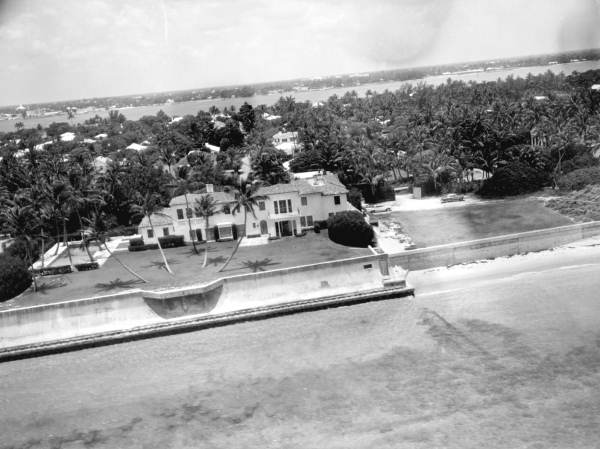
I'm gearing up to give a talk on May 9 at 3 pm at the Preservation Foundation of Palm Beach, discussing Jacqueline Kennedy Onassis's significant role in the historic preservation movement. But I'm also excited to check out what for decades was the Kennedy family's waterfront home on North Ocean Boulevard -- the place where JFK recuperated from horrible back surgery; where he wrote his inauguration speech; where Jackie was fitted for her First Lady wardrobe; and where she began planning the renovation of the White House.


What's even more fitting about this story is that the Addison Mizner-designed home, which Joseph P. Kennedy bought in 1933 for $100,000 from the family of retailer John Wanamaker a decade after it was built, itself became a landmark, preserved by its new owner, the New York investor John K. Castle. He paid $4.9 million for the property in 1995 and restored it over four years, keeping its history in tact.

Jackie would have approved.

By the way, the talk is open to the public, perfectly timed for the Congress of the New Urbanism, in town at the same time.

Friday, April 13, 2012

Fenway Park's 100th Anniversary

Today is opening day at Fenway Park -- and the 100th anniversary of the magical little "bandbox." I could hear the crack of the bats across the Fens from my college dorm room and I still live close enough to walk to a game. But not so long ago, I stood on the field as a reporter for the Boston Globe covering a press conference because the Red Sox ownership wanted to relocate the team to a new facility somewhere else in the city, or even -- gasp -- right there on the spot. Thankfully, the plan died on the vine, a dramatic political and community brawl explained eloquently in this blog post my husband wrote for the Atlantic. Note his reference to Jackie O near the end. Yes, she saved a few landmarks herself. But the Kennedys and Fenway go back a lot further, of course, and continue to this day.


'Honey Fitz,' JFK's grandfather, throws out the first pitch at Fenway.


There's Robert Kennedy at a JFK memorial game in 1964.


Ted Kennedy doing a victory lap with Hall of Fame slugger Jim Rice.


A recent snap of former Congressman Joseph P. Kennedy II with his son Joe the 3rd, now running for Congress himself (in my district).

Tuesday, April 10, 2012

Jackie After O Arrives

My book arrived fresh from the printer and it was placed on the dining table. Over dinner, my husband said, "so, what do you think?"

Me: "About what?"

Him: "The book."

Me: "Oh. That."

The truth is, writing a book is a lot more of a romantic concept than actually publishing it. It's like being pregnant vs. being a new parent, with a baby that needs alot of care and feeding. Both stages are awesome. And both are work. It's just that once the baby arrives, you are so cross-eyed with exhaustion that you are eager for a new phase. Anyway, here it is: My new baby!